
Help & Resources
What Rodents Actually Destroy: Wiring, Insulation, and Your Heating Bill
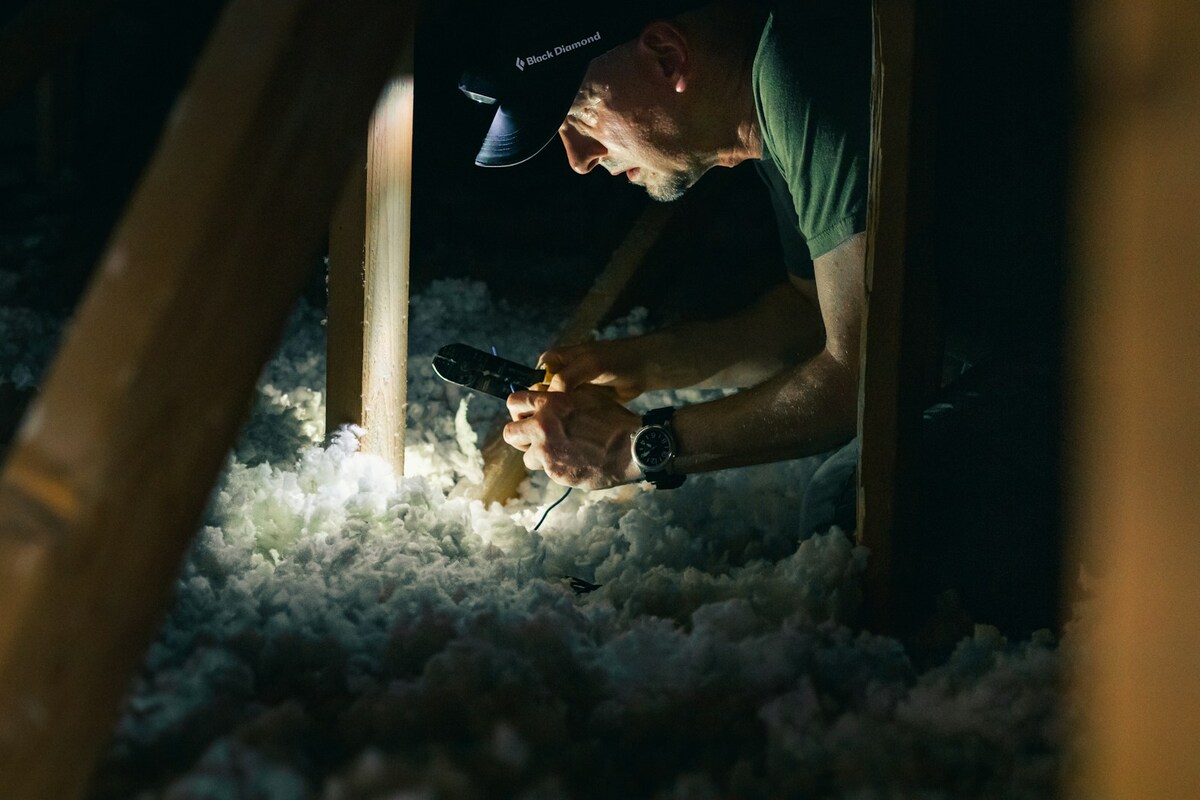
When most people picture a rodent problem, they picture droppings in a cupboard and a mouse darting across the floor. Unpleasant, but manageable. The actual cost of rodents in a home is almost entirely in places you never look, and it accumulates quietly through exactly the months when they are hardest to detect.
Understanding what is really at stake tends to change how urgently homeowners respond. At Neff Exterminating, here is what rodents do to a White Mountains home over a winter.
Why Rodents Chew Constantly
This is the root of nearly all rodent damage, and it is worth understanding. A rodent's incisors grow continuously throughout its life. If it does not wear them down, they overgrow to the point the animal cannot eat.
So rodents gnaw more or less constantly, and not primarily for food. They gnaw on whatever is available and offers the right resistance. Wood, drywall, plastic, insulation, soft metals, and, most consequentially, electrical wiring.
That is why a rodent problem is never static. Every day a population lives in your structure is another day of chewing on materials that were not meant to be chewed.
Electrical Wiring: The Serious One
Chewed wiring is the most dangerous consequence of a rodent infestation, and it is genuinely a fire risk rather than a theoretical one. Rodent damage to electrical systems is recognized as a meaningful cause of structure fires, and the reason is straightforward: when insulation is stripped from a wire inside a wall or attic, you have exposed conductors surrounded by insulation, dust, and nesting material.
What makes it particularly difficult is that the damage is invisible. It happens in wall voids, attics, and crawlspaces, and there is usually no symptom at all until something fails.
Warning signs worth taking seriously include lights that flicker without explanation, outlets or switches that stop working, breakers that trip repeatedly with no obvious cause, or a faint burning smell you cannot locate. Any of those in a home with known rodent activity should be treated as urgent and inspected by a qualified electrician.
The same applies to vehicles, tractors, and equipment stored in sheds and garages, where engine compartment wiring is a frequent target and repair bills routinely run into the thousands.
Insulation and Your Heating Bill
Insulation damage is the most common expense and the one homeowners feel every month without realizing why.
Rodents treat attic insulation as ideal nesting material. They burrow through it, shred it, compress it, and contaminate it with urine and droppings. Insulation works by trapping air in a consistent loft, so once it has been tunneled through and flattened, its effectiveness drops significantly in exactly the areas affected.
The practical result during a White Mountains winter is a house that is harder to heat, a furnace that runs longer, uneven temperatures between rooms, and a heating bill that creeps up without a clear explanation. Because the change is gradual, most people attribute it to fuel prices or an aging furnace rather than to what is happening above the ceiling.
Contaminated insulation also cannot simply be fluffed back up. Once soaked with urine and droppings, it needs removal and replacement, which is frequently the single largest line item in resolving a long running infestation.
Every Month Costs More Than the Last
Rodent damage compounds. Call Neff Exterminating for an inspection and a free quote before the repair bill grows.
Taylor Office: (928) 536-6862
Show Low Office: (928) 532-5300
Ductwork, Plumbing, and the Rest of the Systems
Rodents chew through flexible ductwork, which lets heated air escape into the attic instead of reaching your rooms. Worse, damaged ducts can draw contaminated attic air, complete with dust from droppings and nesting material, into the air you breathe.
They also gnaw on plastic plumbing lines, irrigation tubing, and appliance supply lines, where a failure means water damage rather than just a repair. Vent screens, dryer vent ducting, and weather sealing all take damage as well, and each piece of damage tends to open the structure up a little further for the next arrival.
Contamination and Health
Beyond the structural side, there is a health dimension that deserves plain treatment.
Rodents contaminate surfaces and stored food with droppings, urine, and hair. They carry disease, and they introduce parasites, including fleas, ticks, and mites, into the structure. Those parasites remain after the rodents are gone and can become a separate problem inside the home.
Rodent urine soaks into insulation, drywall, and framing, producing a persistent ammonia odor that works down into living space and can linger long after the animals are removed. In heavier cases, materials have to be removed rather than cleaned.
One practical safety note: dried droppings and nesting material should not be swept or vacuumed casually, because that sends contaminated dust into the air. Cleanup of an established infestation is worth handling properly, with appropriate protection and methods, rather than tackling on a weekend.
Why Waiting Is the Expensive Choice
Rodents reproduce quickly and continuously indoors, where climate does not limit them. A small problem noticed in November is a substantially larger one by March, and every additional animal means more chewing, more nesting, and more contamination.
Compare the two paths. Addressing it early means an inspection, treatment, and sealing the entry points. Addressing it late means all of that plus insulation removal and replacement, electrical repairs, possible duct work, odor remediation, and whatever stored belongings were destroyed along the way.
The difference is not marginal. It is the reason we tell people that the cheapest rodent job is always the one done early.
What Actually Solves It
Effective rodent control has two halves, and both are required. The first is removing the existing population. The second is exclusion, identifying and sealing the entry points so the next wave cannot follow. Traps alone address the first half and leave the second untouched, which is why homes without exclusion work end up repeating the same process every fall.
A proper approach means a full inspection to find how they are getting in, treatment to eliminate what is present, sealing of entry points with materials rodents cannot chew through, and guidance on the conditions around the property that keep drawing them in.
Serving the White Mountains
Neff Exterminating provides pest and rodent control for homes and businesses throughout Show Low, Snowflake, Taylor, Pinetop-Lakeside, Holbrook, Winslow, Eagar, Springerville, Heber-Overgaard, and surrounding communities. View our full service area list to confirm we cover your location.
Protect Your Home Before Winter Deepens
Wiring, insulation, and your heating bill are all on the line. Call Neff Exterminating today for a free quote.
Taylor Office: (928) 536-6862
Show Low Office: (928) 532-5300
‹ Back
Recent Posts
-
What Rodents Actually Destroy: Wiring, Insulation, and Your Heating Bill
November 24, 2026
-
Hosting for the Holidays? A Pre-Thanksgiving Pest Check
November 20, 2026
-

Squirrels and Chipmunks: The Fall Invaders of White Mountains Homes
November 13, 2026
-
Why Pest Problems Get Worse in Winter, Not Better
November 6, 2026
-

Winter Pest Prep for White Mountains Businesses
October 30, 2026
