

Help & Resources
Spring Weed Control in the White Mountains: Why April Treatments Make All the Difference
By the time most homeowners notice their yards and properties are overrun with weeds, the battle is already harder than it needed to be. In the White Mountains, April is the single most important month for weed control, and the difference between treating early and reacting late can mean months of cleanup versus a season of clean, manageable property.
At Neff Exterminating, our weed control team has been helping homeowners and businesses in Show Low, Snowflake, Taylor, and across the White Mountains get ahead of spring weed pressure for over 27 years. Here's why timing matters so much, and what you can do about it right now.
Why April Is a Critical Window
Weed management in the White Mountains is different from the desert lowlands. At higher elevations, spring warmth arrives later, snowmelt provides significant soil moisture, and the growing season is compressed. That combination creates a very specific window where treatment is most effective, and missing it means playing catch-up all summer.
Here's what's happening in April that makes it so important:
Cool-Season Weeds Are in Their Active Growth Phase
Many of the most problematic weeds in our region, including cheatgrass, mustard weed, and henbit, are cool-season plants. They germinate in late winter and early spring and hit their peak growth in April. This is also when they're most vulnerable to post-emergent herbicide treatments. Wait until summer, and they've already gone to seed and next year's problem is already in the ground.
Pre-Emergent Treatments Are at Their Most Effective
Pre-emergent herbicides work by creating a chemical barrier in the soil that prevents weed seeds from germinating. For this to work, it needs to be applied before the seeds sprout. Once warm-season weeds begin germinating in late April and May, that window has closed. An April pre-emergent treatment gives you protection through the summer peak season.
Weeds Are Small and Easier to Control
Post-emergent treatments (those applied to weeds already growing) are most effective on young, actively growing plants. A 2-inch weed responds to treatment very differently than a 12-inch weed that's already invested significant energy in its root system. Early spring is when the ratio of treatment cost to results is most favorable.
Common Spring Weeds in the White Mountains
Knowing what you're up against helps you recognize emerging problems early. The most common weeds our technicians treat in the Show Low and Snowflake area during spring include:
Cheatgrass (Downy Brome)
One of the most widespread invasive grasses in Arizona's high country. Cheatgrass germinates in fall and winter, explosively grows in spring, and dries out by early summer into a fire hazard. It's particularly problematic on roadsides, disturbed soil, and along fence lines.
Mustard Weed (Tumble Mustard / London Rocket)
A tall, aggressive cool-season weed with yellow flowers. If left untreated, it can grow 4-6 feet tall and produce thousands of seeds before dying back in summer heat. Common along property edges, driveways, and in gravel landscaping.
Prickly Lettuce
A fast-growing broadleaf weed with prickly leaf edges that can irritate skin. It thrives in disturbed soil and grows rapidly in spring moisture.
Common Mallow (Cheeseweed)
Recognizable by its round, scalloped leaves, mallow is a persistent broadleaf weed that establishes a deep taproot quickly, making it harder to control as it matures.
Storksbill (Filaree)
A low-growing, mat-forming weed that spreads aggressively in spring. Its seed pods have a distinctive corkscrew shape and can penetrate animal fur and clothing, spreading it widely.
Weed Control for Different Property Types
Not all weed problems look the same, and neither do the solutions. Here's how we approach weed control across different property situations:
Residential Lawns and Landscaping
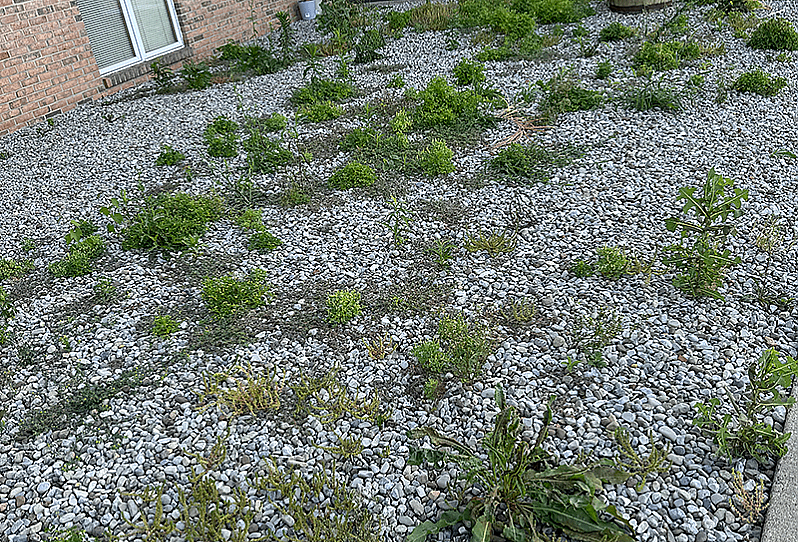
Gravel and rock-mulch landscaping is extremely common in the White Mountains and is actually more prone to weed infiltration than many homeowners expect. Weed seeds blow in and germinate in the gravel, and without soil disruption, they can be persistent. We apply pre- and post-emergent treatments tailored to what's growing in the gravel and what's planted nearby to avoid damage to desirable plants.
Vacant Lots and Rural Properties
Larger parcels in the White Mountains can see explosive weed growth in spring that creates fire risk, reduces property aesthetics, and, critically, attracts pests. Dense weed growth gives rodents and insects harborage that brings them closer to your home or structures. Pest activity and weed problems frequently go hand in hand, treating both together is the most effective approach.
Commercial Properties
Curb appeal matters for businesses. Weeds in parking lots, along building perimeters, and in landscaped areas send the wrong message to customers. We offer commercial weed control programs for businesses throughout Show Low, Snowflake, Taylor, and the wider region, including ongoing maintenance schedules that keep properties looking sharp all season long.
Cabins and Seasonal Properties
If your White Mountains cabin sits vacant over winter, spring weed growth can be especially aggressive. We can treat the property before you arrive for the season, so you're coming back to a clean property rather than a jungle.
Pre-Emergent vs. Post-Emergent: What's Right for Your Property?
A question we get often: should I be focusing on pre-emergent or post-emergent treatment?
The answer is usually both, applied strategically:
- Pre-emergent herbicides go down in early April to prevent summer annuals from germinating. They're your first line of defense and the most cost-effective way to prevent summer weed explosions.
- Post-emergent treatments address what's already growing, especially the cool-season weeds already active in April. They're applied directly to target weeds and work best on young, actively growing plants.
Getting the timing and product mix right is where professional treatment makes a real difference. The wrong product or timing can damage desirable vegetation, provide incomplete control, or require multiple retreatments. Our licensed technicians know which products work in the specific soil and climate conditions of the White Mountains, and how to apply them safely and effectively.
Weed Control + Pest Control: A Smarter Approach
One thing that makes Neff Exterminating unique is that we offer both weed control and pest control, which matters more than most people realize. Dense weed growth isn't just an eyesore. It creates harborage for ants, rodents, scorpions, and other pests. It retains moisture that attracts termites. It provides cover for rodents moving toward your home.
When we treat a property for weeds and pests together, the results are more comprehensive and longer-lasting than treating either in isolation.
Serving the Entire White Mountains Region
Neff Exterminating provides professional weed control services for residential and commercial properties throughout the White Mountains, including Show Low, Snowflake, Taylor, Pinetop-Lakeside, Holbrook, Winslow, Eagar, Springerville, Heber-Overgaard, and all surrounding communities. View our full service area list to confirm we cover your location.
April Won't Wait, Neither Should Your Weed Treatment
The best time to treat weeds in the White Mountains is right now. Don't let spring weeds get ahead of you, call Neff Exterminating today for a free quote and get your property protected before summer hits.
Taylor Office: (928) 536-6862
Show Low Office: (928) 532-5300
‹ Back